




Description
The money plant, scientifically known as Epipremnum aureum, is one of the most popular and widely grown indoor plants in the world. It is admired not only for its attractive appearance but also for its resilience, ease of care, and cultural significance.
🌿 General Description
The money plant is a tropical evergreen vine that belongs to the arum family (Araceae). It is native to regions like the Solomon Islands but is now cultivated globally as a houseplant. It is commonly called pothos, devil’s ivy, or golden pothos.
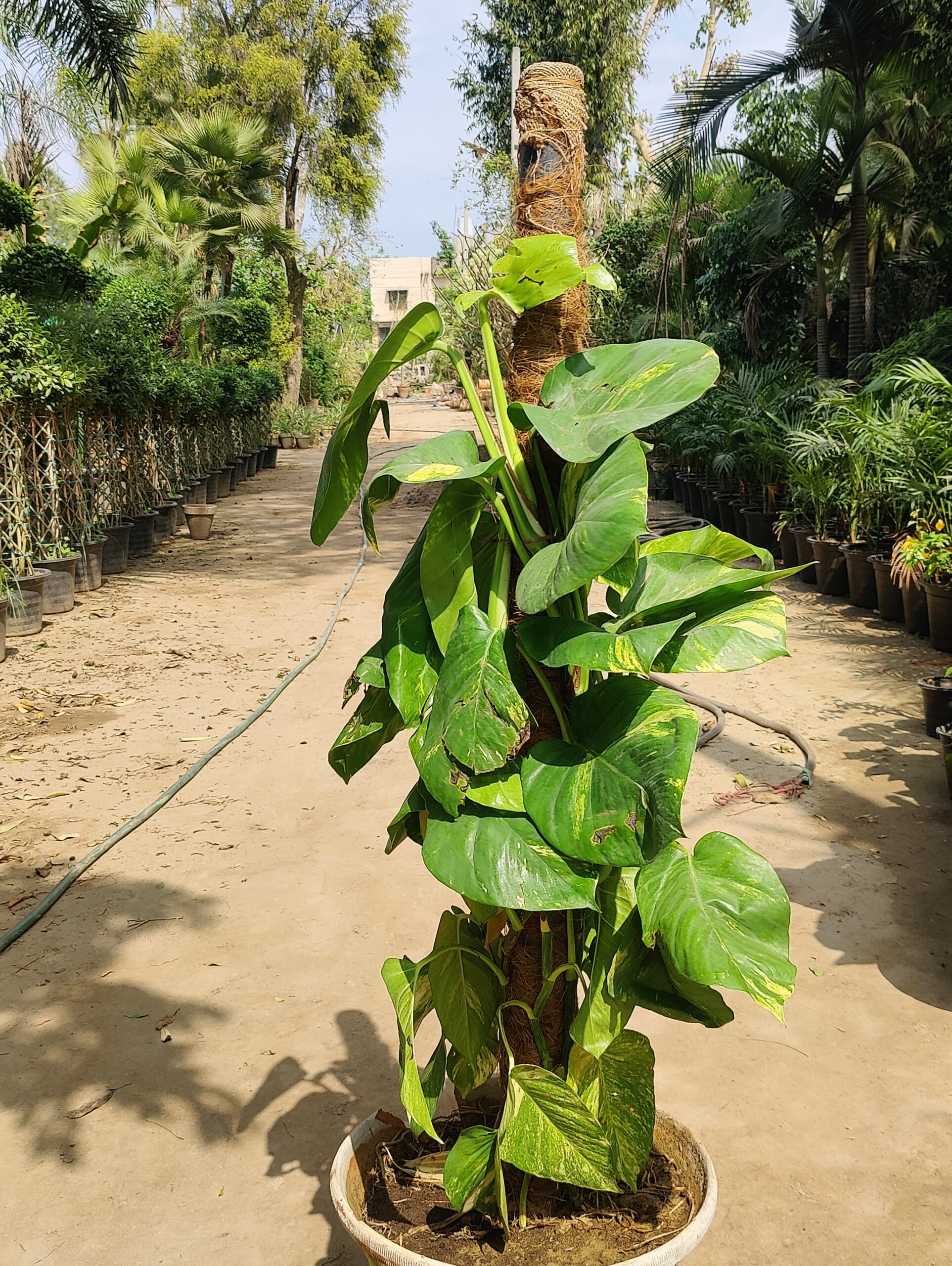
The plant is known for its heart-shaped leaves, which are usually bright green with yellow or cream variegation. These leaves can vary in size depending on growing conditions—small indoors and much larger in the wild.
🌱 Growth and Structure
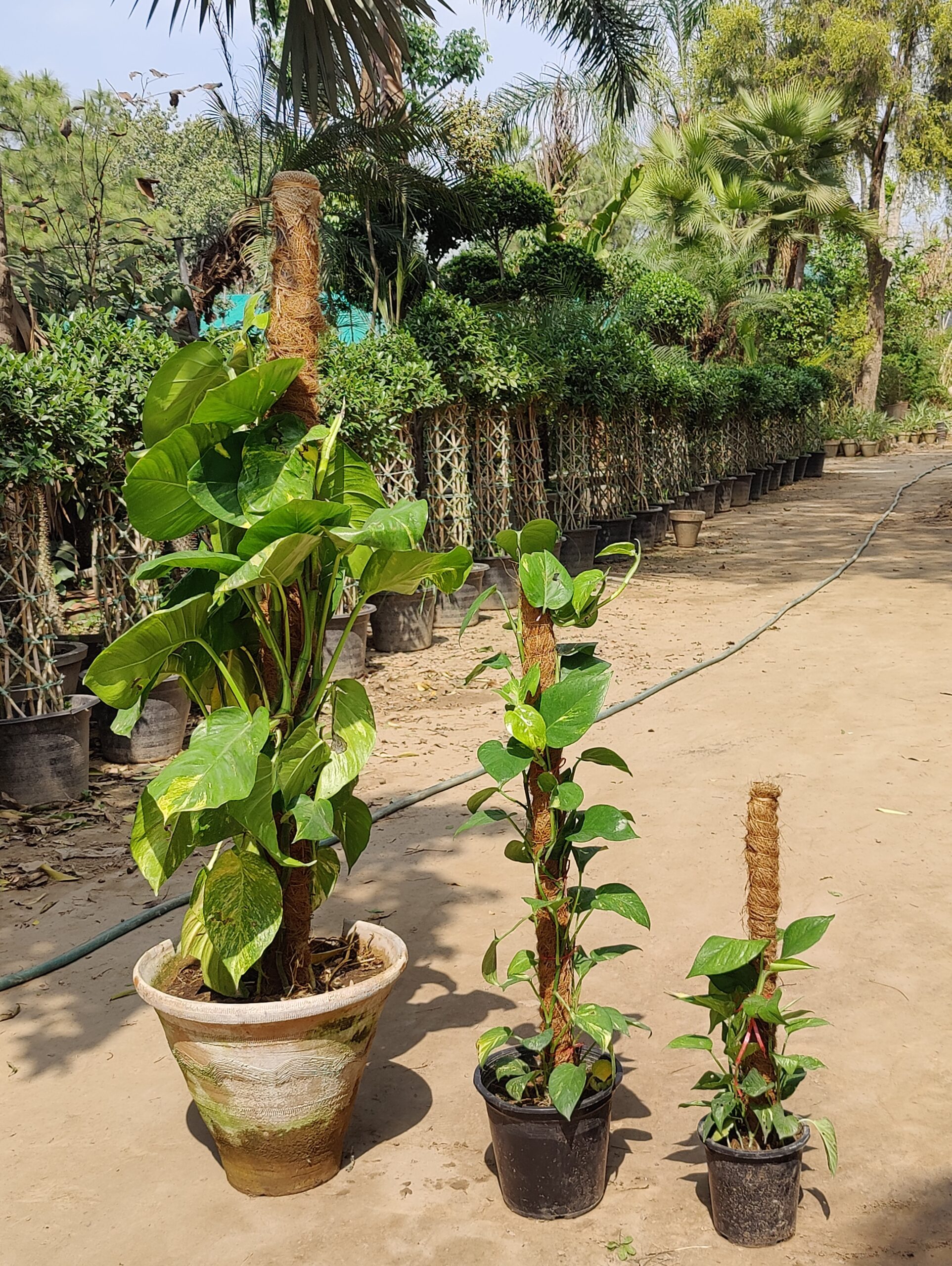
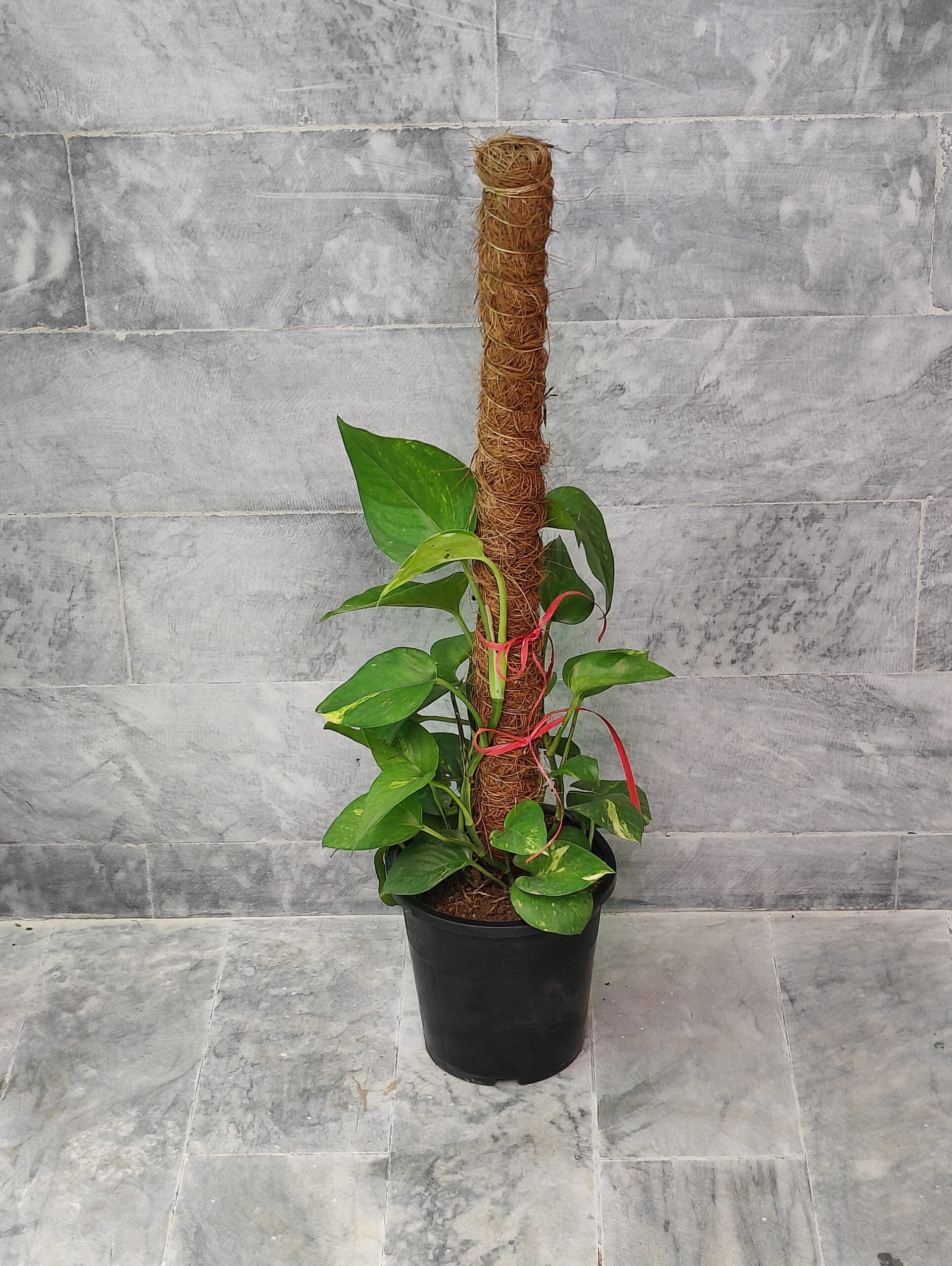
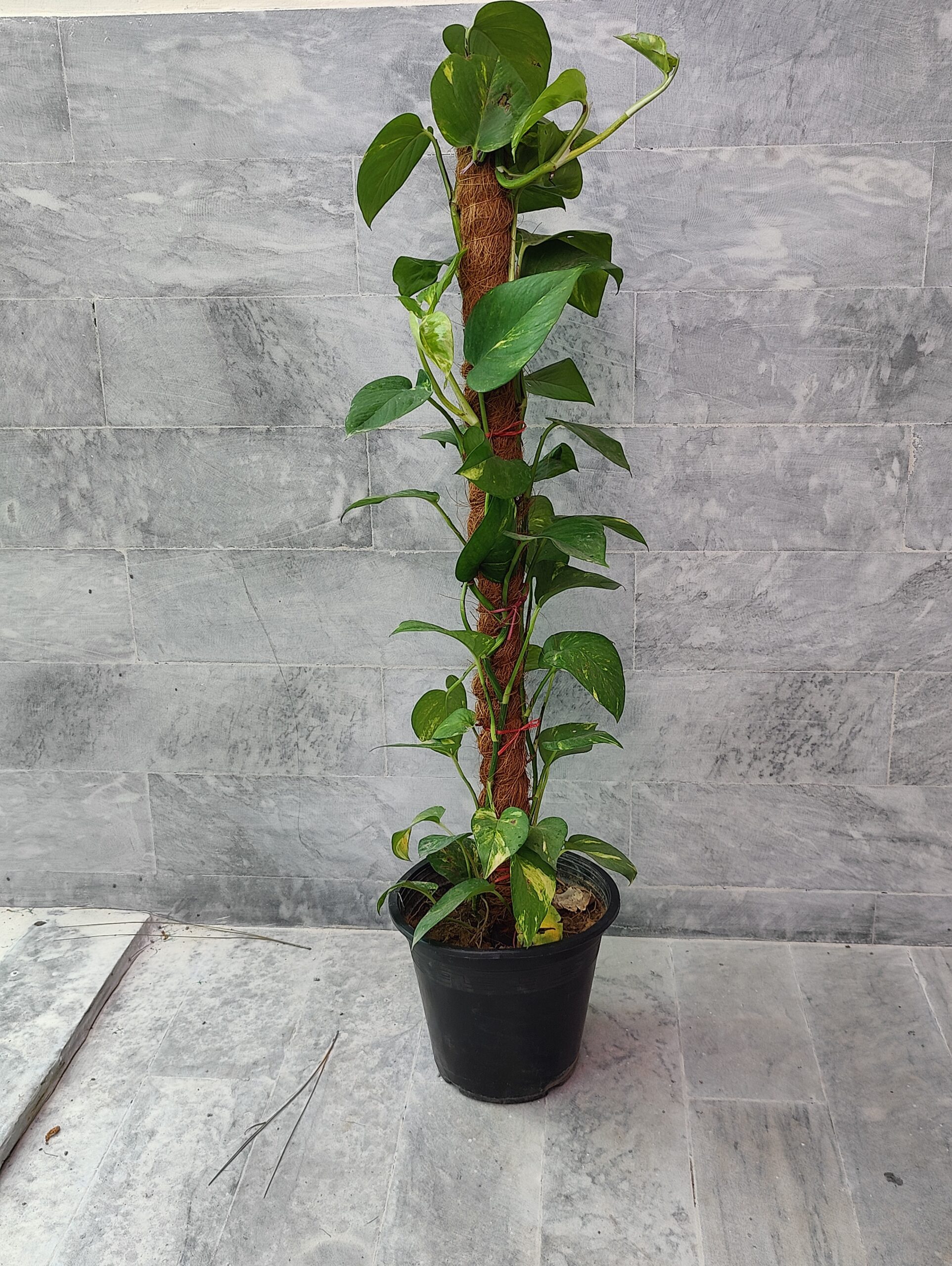
Money plant is a climbing and trailing vine. In natural environments, it climbs trees using aerial roots, sometimes growing very long—up to 20 meters or more. Indoors, it is often grown in hanging baskets, pots, or trained to climb supports like moss poles.
- Stems: Flexible, green, and capable of rooting at nodes
- Leaves: Glossy, smooth, and heart-shaped
- Roots: Both underground and aerial roots
🌞 Growing Conditions
One of the biggest reasons for its popularity is its adaptability:
- Light: Thrives in indirect sunlight but can tolerate low light
- Water: Requires moderate watering; overwatering should be avoided
- Soil: Well-draining potting mix is ideal
- Temperature: Prefers warm conditions (18–30°C)
It can also grow in water alone, making it a common plant for decorative bottles and jars.
🌼 Maintenance and Care
Money plant is considered a low-maintenance plant, suitable even for beginners.
- Needs occasional pruning to maintain shape
- Leaves should be cleaned to keep them shiny and healthy
- Fertilizer can be applied monthly for better growth
- Rarely affected by pests, though overwatering may cause root rot
🌏 Cultural and Symbolic Importance
The money plant holds special meaning in many cultures:
- In practices like Feng Shui, it is believed to attract wealth, prosperity, and positive energy
- Many people keep it in homes and offices for good luck
- It is often given as a gift for new beginnings, such as moving into a new house
🌬️ Air Purification
Money plant gained attention for its air-purifying qualities after studies like those conducted by NASA suggested that certain indoor plants can help remove toxins from the air. While its real-world impact may vary, it still contributes to a healthier indoor environment.
⚠️ Toxicity
Although beneficial, the plant contains calcium oxalate crystals, making it toxic if ingested by pets or humans. It can cause irritation, so it should be kept out of reach of children and animals.
🌿 Varieties
There are several beautiful varieties of money plant, including:
- Golden pothos (green with yellow streaks)
- Marble queen (white and green variegation)
- Neon pothos (bright lime-green leaves)
- Jade pothos (solid green leaves)
🏡 Uses
- Indoor decoration
- Office and home greenery
- Hanging baskets and vertical gardening
- Water propagation displays
🌟 Conclusion
The money plant is more than just a decorative plant—it is a symbol of prosperity, a natural air purifier, and a perfect companion for both beginner and experienced plant lovers. Its ability to thrive in different environments with minimal care makes it one of the most cherished houseplants around the world. 🌱
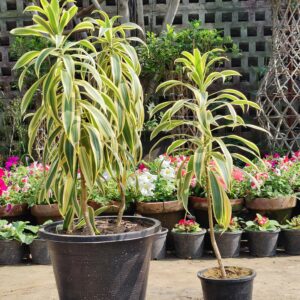
Here are some pictures of a money plant (commonly known as pothos):
The money plant is a popular indoor plant known for its heart-shaped leaves and easy care. It’s often associated with good luck and prosperity in many cultures.
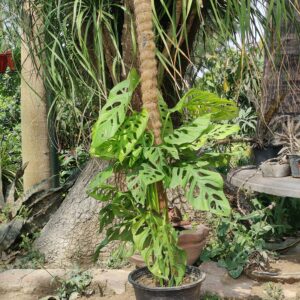
Here are some pictures of a money plant (commonly known as pothos):
The money plant is a popular indoor plant known for its heart-shaped leaves and easy care. It’s often associated with good luck and prosperity in many cultures.
Reviews
There are no reviews yet.